“If I gain knowledge I have everything. If a friend gives me knowledge, he gives riches. The friend who gives you wisdom is the one that loves you.”
Muchinda Madzoke (Mr. Magwisanye), as translated by Adnomore Chirindira
I am passionate about research that supports the long-term flourishing of people and ecosystems, especially those that have been harmed in the past or present. The quote from Mr. Magwisanye beautifully sums up the way I feel about community-engaged research, teaching, and outreach: knowledge should be a gift, given freely, that helps someone. This principle is central to the way I approach my work: I seek to put the tools and products of research in the hands of people who typically don’t have access to them.
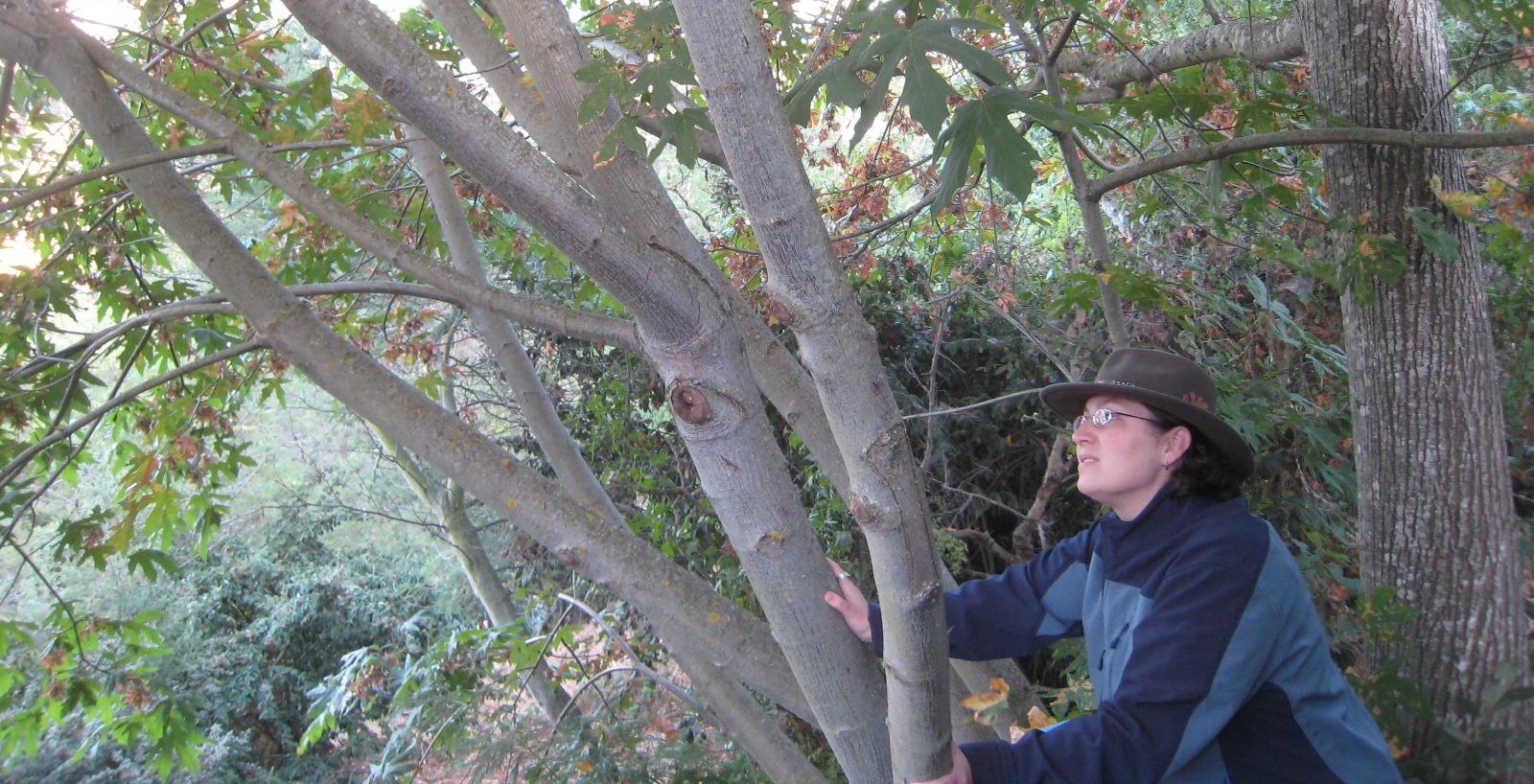
I am currently a researcher at the University of California, Davis at the Center for Community and Citizen Science and the Feminist Research Institute. I also work in UC Berkeley’s Department of Environmental Science, Policy, and Management, acting as the Staff Scientist for the Science Advisory Panel to the California Wildfire & Forest Resilience Task Force.
In addition to these affiliations, I am also a member of the SEEKCommons network, co-chair of the Oak Woodland Conservation Workgroup in UC Agricultural and Natural Resources, on the leadership team for Data Science by Design, a member of the Association for Advancement of Participatory Sciences’ Research & Evaluation Working Group, and a collaborator with the Science and Justice Research Center at UC Santa Cruz.
My scholarship sits at the intersection of data science, participatory action research, and Science and Technology Studies (STS). This combination is particularly timely as data science becomes an increasingly dominant way to know and govern both society and the environment we depend on. Allowing this trend to continue without critical evaluation, especially in conservation and natural resources science, could very easily lead to reinforcing structural injustice and environmental degradation. Interdisciplinary study is essential in these situations, and only becoming more so.
As a data scientist, I employ a variety of ecoinformatic tools to understand and improve the sustainability of complex social-ecological systems, often using multi-decadal legacy data. I also apply Science and Technology Studies lenses to my modeling processes in order to see potential ways to make social-ecological system management more just. I prefer to work collaboratively with communities on modeling: teaching mapping and modeling skills, collaboratively building data representations and models, and analyzing and synthesizing community-held data as appropriate. At the same time, I look for ways to create space for qualitative and other forms of knowledge to reside alongside quantitative analysis, using mixed and integrative methods.
You can find out more here about my professional work. For the condensed version, see my list of publications; for a little more detail, you can find narratives describing most of those projects under Research, Outreach, and Teaching.
I also have profiles on Google Scholar, GitHub, CoMSES.net, Academia.edu, ResearchGate, and LinkedIn.
(This site describes my academic research, outreach, and teaching. For my private tutoring business, see Solera Individualized Learning.)
 MV Eitzel
You must be logged in to post a comment.